
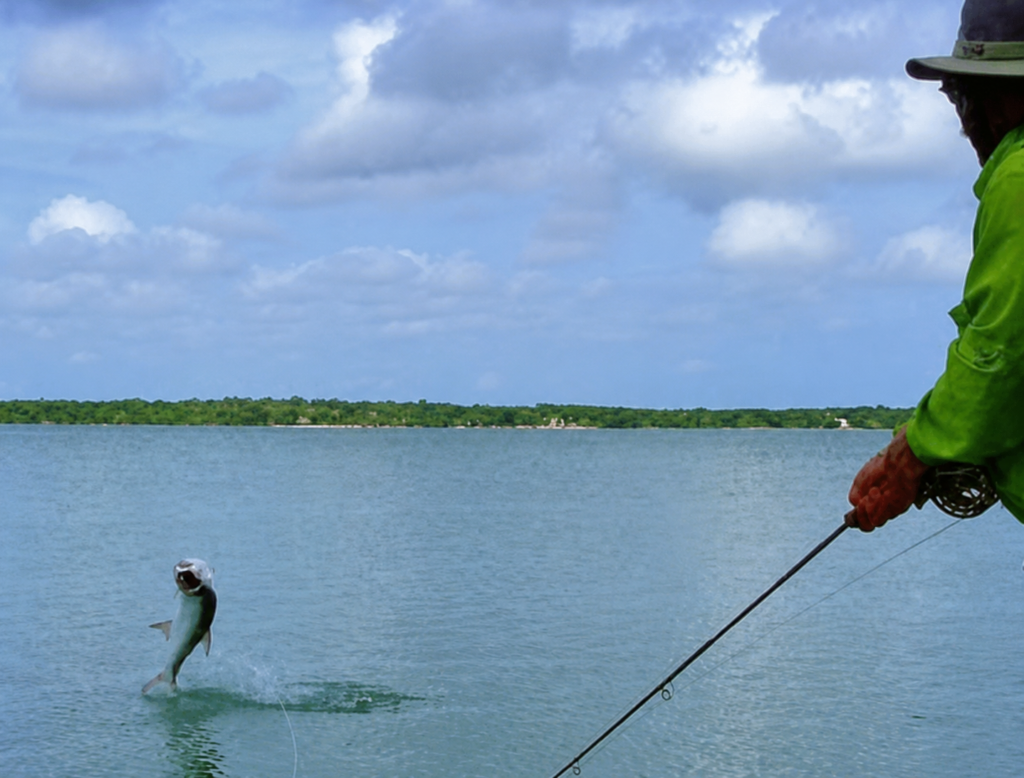
Belize’s Grand Slam: Why Bonefish, Permit and Tarpon Are Catch-and-Release Only
Bonefish, permit and tarpon form Belize’s celebrated Grand Slam: catching all three species during a single day on the flats.
But these fish are more than prized catches. They support fishing guides, families and coastal communities throughout Belize. That is why all three species are legally protected and must be released.
What Belize’s law requires
In 2009, Belize introduced national catch-and-release protection for bonefish, permit and tarpon.
Under the regulation, no person may possess any of these species except while catching and releasing it. Catch-and-release means returning the fish to the water immediately and in the same condition in which it was landed.
The Belize Fisheries Department continues to list bonefish, permit and tarpon as protected species. The rule applies whether the fish was caught with a fly rod or spinning tackle. Anglers must also carry a valid sport fishing licence; see our Belize Fishing Licence guide for who needs one and how to purchase it online.
For anglers, the practical rule is simple:
- Enjoy the fight.
- Follow your guide’s instructions when landing the fish.
- Minimize handling and time out of the water.
- Take a quick photograph when conditions allow.
- Release the fish safely.
Why Belize protected these three species
The case for protection was not based only on their popularity with anglers. Research showed that a living sport fish could contribute to Belize’s economy repeatedly as visiting anglers hired guides, booked accommodations, ate at restaurants and used other local services.
Turneffe Atoll Trust reports that a 2013 study estimated the flats fishery’s annual economic impact at approximately BZ$112 million. Its 2022 study estimated an annual contribution of approximately BZ$246 million—about 6.7% of Belize’s GDP at the time—and support for roughly 6,000 jobs. See the economic research.
That economic evidence helped demonstrate why bonefish, permit and tarpon are more valuable swimming on Belize’s flats than being taken home.
Protection does not end with releasing the fish
Catch-and-release is an important part of conservation, but it does not protect the fishery by itself.
Bonefish, permit and tarpon also depend on healthy mangroves, seagrass beds, flats and connected coastal habitats. Scientific research describes all three species as highly vulnerable and emphasizes the importance of habitat protection alongside responsible fishing practices. Read the 2023 fisheries research.
This distinction matters: Belize’s law protects the fish from being harvested, but responsible handling and healthy habitat help those released fish survive.
What this means on a guided fishing trip
When you hook a bonefish, permit or tarpon with Captain Nato’s Charters, the objective is to land it, enjoy the moment and return it safely to the water.
Your guide will help manage the final part of the fight and release. Listen carefully, have your camera ready and avoid extending the fish’s time out of the water simply to get a better photograph.
That release is not merely a courtesy or a company policy. It is part of fishing legally and responsibly in Belize.
The Grand Slam remains a genuine challenge
Catching all three protected species in one day is never guaranteed.
Bonefish are available throughout the year. Permit fishing is generally strongest from February through August, while tarpon opportunities vary with fish size, season, tides and local conditions. Wind, cloud cover and water movement can affect which species are realistically available on a particular day.
See our Belize Fishing Calendar for a month-by-month overview, or learn more about Fly Fishing and Spin Casting in San Pedro before choosing your trip.
The law gives every released fish another opportunity to survive, reproduce and challenge a future angler. That is what makes releasing your Grand Slam part of the accomplishment—not the end of it.
Ready to pursue a Belize Grand Slam with a family that has fished these waters for generations? Book a fly-fishing or spin-casting trip with Captain Nato’s Charters.