
The Belize Grand Slam Challenge: Catch All Three
Catching a bonefish, permit and tarpon in one day is one of saltwater fishing’s greatest challenges. Belize offers a genuine opportunity—but conditions, execution and luck must all come together.
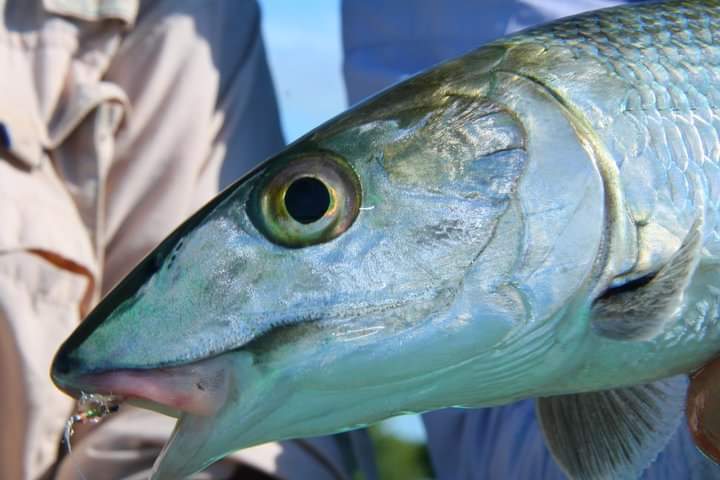 BonefishYear-round and generally the most consistent target.Bonefish fishing →
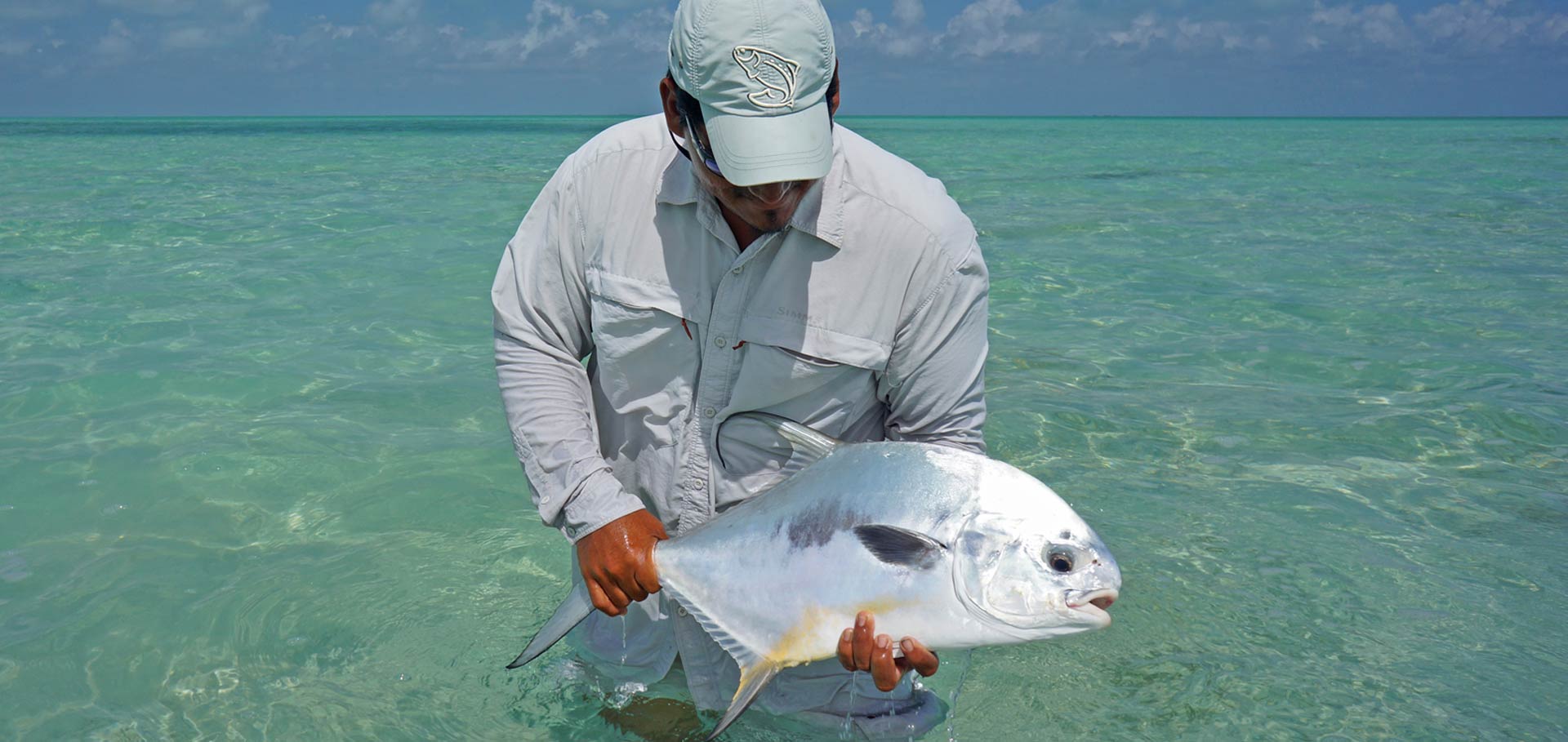 PermitOften the hardest and most unpredictable piece.Permit fishing →
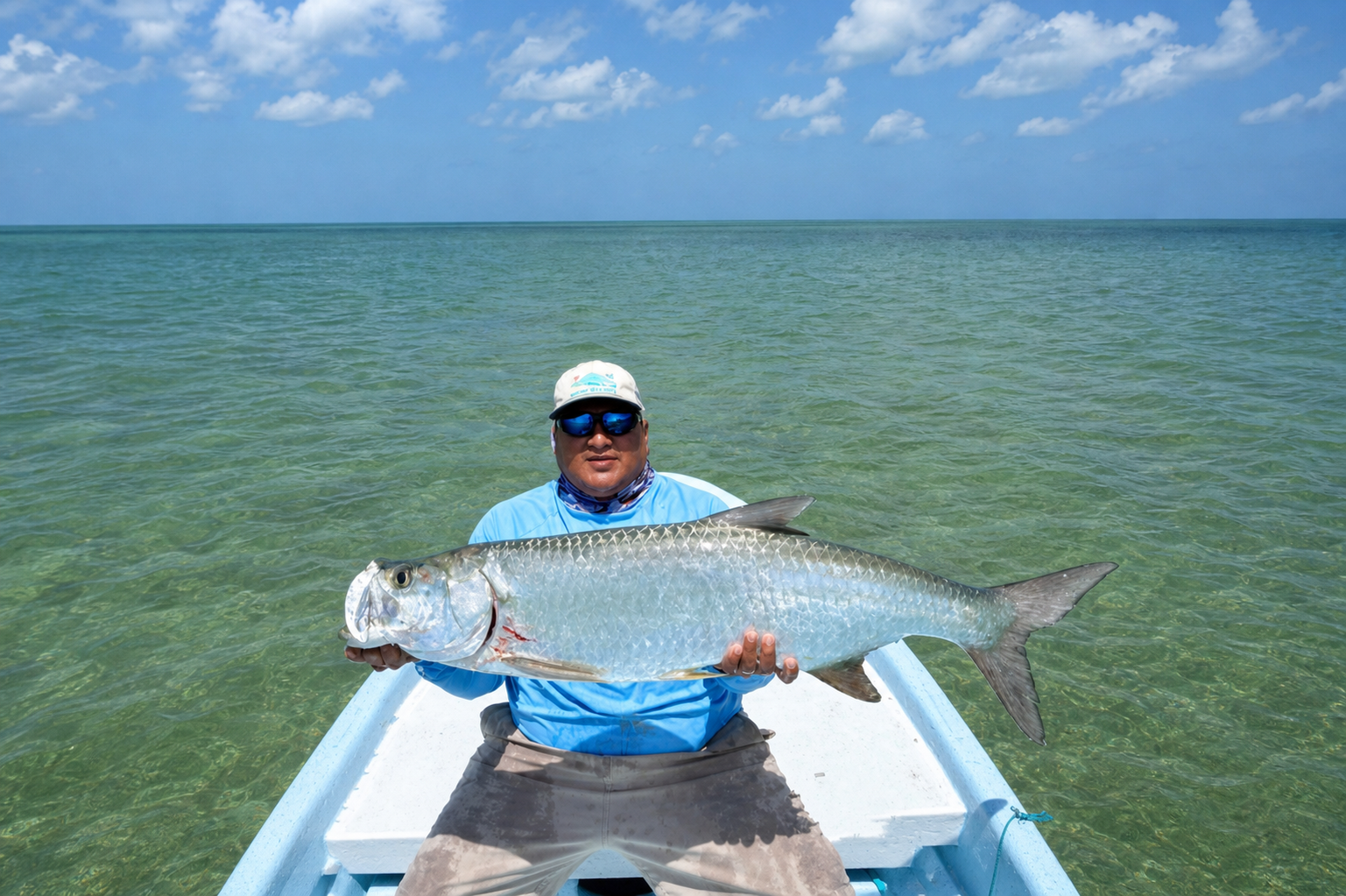 TarponOpportunities vary with season, habitat and conditions.Tarpon fishing →
What a Grand Slam Actually Requires
A successful attempt requires suitable conditions, accurate casting, careful presentation, good decisions and some luck. The guide can choose water, position the boat and coach the shot, but cannot make three wild species appear and feed on command.
The challenge is meaningful precisely because all three pieces must come together in a single day.
Use the Tide—But Never Consider It Alone
Tide direction and timing shape how fish move between deeper water, shallow flats, channels, mangrove edges and feeding areas.
Rising tide
In Captain Nato’s local experience, rising water can create opportunities for permit moving onto the flats.
Falling tide
Falling water can concentrate bonefish, tarpon and snook along channels and mangrove travel routes.
Strong movement
Larger tidal ranges can create productive periods, but stronger water does not automatically mean better fishing everywhere.
The Three Species Are Not Equally Available
Bonefish: year-round
Bonefish are the most consistent target, but clear shallow water still demands a quiet approach and accurate presentation.
Permit: February–August
Captain Nato generally considers this a productive local period. Even then, an angler may see fish without receiving a clean shot—or make a good presentation and receive a refusal.
Tarpon: different windows
October through February is important for baby tarpon and snook as cold fronts can lower tides. Larger migratory tarpon are commonly associated with summer, but accessibility varies.
See the Belize Fishing Calendar for the month-by-month overview.
Accuracy Matters More Than Raw Distance
You do not need to be a tournament caster. You do need to deliver the fly or lure quickly where the guide directs you, often with very little time.
Practice these casts
- Into and across the wind
- One or two false casts
- Quick pickup and redirection
- Target casting instead of distance alone
- Backhand and forehand presentations
Learn the clock system
Your guide may call: “permit at eleven o’clock, forty feet.” Practice reacting to direction and distance before the first serious opportunity.
Freshwater anglers: strip set
Keep the rod low and pull firmly with the line hand. A trout set can remove the fly before the hook is secure.
Read what changes when you bring trout-fishing skills to Belize.
Let the Guide Read the Fish and Choose the Setup
Shrimp and crab imitations matter for bonefish and permit; baitfish patterns can suit tarpon. The right choice depends on depth, clarity, forage, bottom type, fish behavior, wind, light and whether you are fly fishing or spin casting.
Discuss group size and rotation before booking. See Fly Fishing & Spin Casting.
Expect the Plan to Change
A Grand Slam attempt rarely follows a fixed order. The guide may begin with the strongest morning opportunity, then move as tide, visibility and wind change.
Cloud cover can make sight-fishing for bonefish and permit harder. Wind can limit exposed flats. Captain Nato’s approach is to find workable sheltered water and realistic alternatives such as tarpon, snook or jacks.
Adapting is good guiding—not evidence that the original target was guaranteed.
Can a beginner catch a Grand Slam?
Yes—but that does not make it easy or predictable. A first-time saltwater angler who listens, responds quickly and accepts coaching can capitalize on an exceptional day. An experienced angler may still finish with only one or two species.
Can a guide guarantee a Grand Slam?
No responsible guide can guarantee one. A guide can select water, position the boat, find fish, recommend the presentation and coach the cast. The guide cannot control three wild species.
How to Give Yourself the Best Chance
- Tell Captain Nato your Grand Slam goal before booking.
- Ask what is realistic for your dates.
- Allow more than one fishing day if possible.
- Practice fast, accurate casting.
- Learn the strip set.
- Wear brown or copper polarized sunglasses.
- Accept the guide’s fly, lure and location choices.
- Stay quiet and ready.
- Treat every legitimate shot as valuable.
- Enjoy a good day even if the Slam remains unfinished.
Conditions, Execution and Luck Must Meet
Belize provides the habitat and species diversity needed for a genuine Grand Slam attempt. Captain Nato and the Verde family provide local knowledge, boat positioning and coaching.
The remaining pieces are conditions, execution and luck. That uncertainty is exactly what makes the Belize Grand Slam worth pursuing.

Catch, Photograph, Release
A Grand Slam is completed when all three fish are landed and released. Careful handling protects the fish—and the flats fishery that gives the next angler a chance.
Ready to Take Your Shot?
Tell Captain Nato that a Grand Slam is your goal when you request your dates.